

 Vietnamese
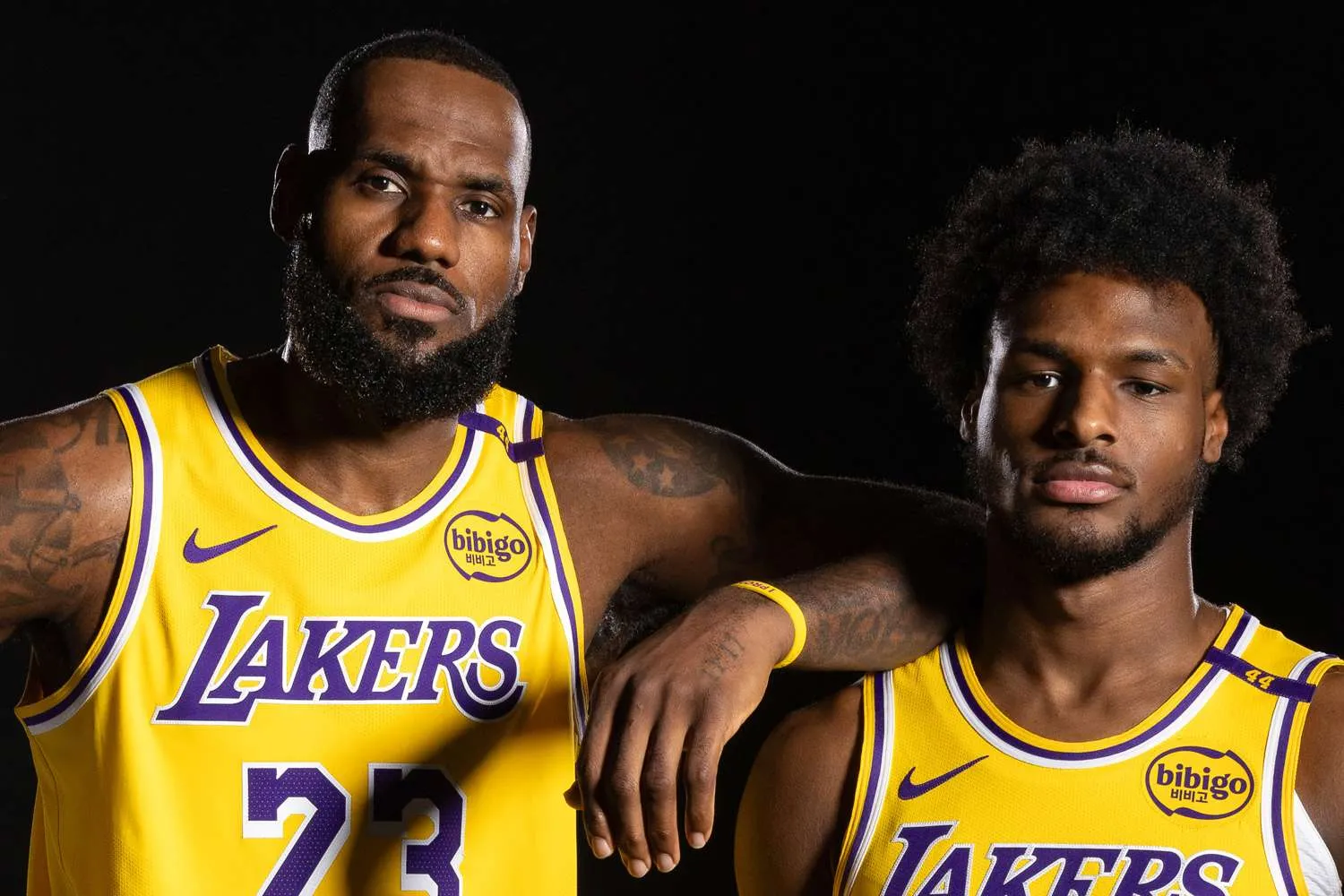
LeBron James reflects on leadership beyond the basketball court
LeBron James has spent more than two decades mastering what it means to lead under the brightest lights basketball has to offer. From the moment he stepped into the national spotlight as a high school phenom in Akron, Ohio, leadership has followed him like a shadow. Whether carrying struggling franchises, navigating championship expectations, or setting standards in locker rooms filled with veterans and young stars alike, LeBron has rarely shied away from responsibility. Yet, as he recently revealed, the most challenging and meaningful leadership lessons he applies today are no longer confined to the NBA hardwood.
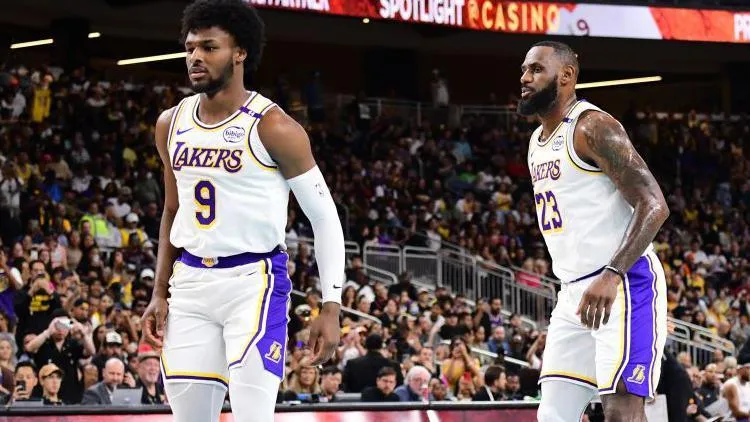
Speaking candidly on the Mind the Game podcast, the 40-year-old Lakers star explained how his approach to leadership has evolved within his own household. With three children - Bronny, Bryce, and Zhuri - LeBron acknowledged that leadership is not a one-size-fits-all concept. Each child requires a different tone, a different level of patience, and a different kind of guidance to truly reach their potential. That understanding, he said, was shaped by decades of navigating professional sports, where learning how to motivate individuals can be just as important as drawing up the perfect play.
LeBron’s comments arrived at a sensitive moment, particularly for his eldest son Bronny James, who is navigating the early and often unforgiving stages of his NBA journey.
Bronny James’ early NBA path has been anything but smooth
Bronny James entered the NBA carrying a burden few young players have ever experienced. While every rookie faces pressure to prove themselves, Bronny’s last name amplified expectations to an extraordinary degree. Drafted by the Los Angeles Lakers in the second round, the 21-year-old guard immediately found himself under a microscope, with fans and analysts debating not only his talent but also whether his selection was influenced by his father’s legacy.
After showing encouraging flashes during Summer League, many believed Bronny would see steady minutes as the season unfolded. Instead, his role has been limited. Through the early portion of the campaign, he appeared in just 13 games, averaging under 10 minutes per contest. The Lakers’ depth, combined with their immediate win-now expectations, left little room for extended on-the-job development at the NBA level.
As a result, Bronny was once again assigned to the G League, a move that echoed his rookie season and reignited public debate. To some observers, the demotion symbolized stagnation. To others, it represented a necessary step in a long-term development plan. For Bronny himself, it was another reminder that progress in professional basketball rarely follows a straight line.
LeBron’s message emphasizes patience over instant results
Rather than expressing frustration or disappointment, LeBron James framed his son’s experience as an essential part of the process. Drawing from his own journey, the four-time NBA champion stressed that growth does not happen overnight. Experience, repetition, and adversity, he explained, are often the most effective teachers.
LeBron highlighted that sports taught him patience long before fatherhood ever did. He learned that setbacks are not indicators of failure but checkpoints along the way. That philosophy now guides how he communicates with Bronny, particularly during moments when external noise threatens to overshadow internal progress. The veteran star made it clear that he wants his son to understand that development is earned, not granted, regardless of name recognition or public attention.
In LeBron’s view, shielding Bronny from hardship would do more harm than good. Instead, allowing him to face challenges head-on—and learn from them—is the only path toward sustainable improvement.
Brief opportunities still offer glimpses of Bronny’s potential
Despite limited playing time, Bronny James has shown flashes that hint at his long-term upside. One of his most notable moments came during the Lakers’ back-to-back matchup against the Boston Celtics, when the team was severely short-handed. With LeBron James and Luka Dončić sidelined, the Lakers leaned deeper into their bench, giving Bronny a rare opportunity to see the floor in a meaningful context.
In just seven minutes of action, Bronny scored five points, displaying confidence and composure that stood out despite the small sample size. While the stat line itself was modest, the moment carried symbolic weight. It demonstrated that Bronny can contribute when called upon, even under pressure, and reinforced the idea that readiness matters just as much as opportunity.
For a young player fighting to establish his identity, moments like these serve as validation. They may not immediately alter rotation decisions, but they build internal belief something LeBron values deeply.
LeBron James shares pride in Bronny’s steady improvement
Beyond box scores and public perception, LeBron James expressed genuine pride in the progress he has observed behind the scenes. As both a father and a lifelong student of the game, LeBron emphasized that improvement is not always visible to casual observers. Sometimes, it appears in subtler forms: better positioning on defense, increased comfort within offensive sets, or sharper decision-making under pressure.
LeBron praised Bronny’s ability to apply lessons learned in the G League to subsequent stages of his development. According to him, that growth became evident during Summer League, where Bronny appeared noticeably more comfortable and confident. Carrying that momentum into the regular season, even in limited opportunities, signaled that the work was translating.
For LeBron, these incremental steps matter far more than immediate statistical output. They reflect a player learning how to survive and adapt at the professional level—skills that cannot be rushed or manufactured.
Navigating criticism and expectations tied to a famous last name
Perhaps the most difficult challenge Bronny faces has little to do with basketball itself. The constant comparison to his father creates an environment where patience is scarce and mistakes are magnified. Every missed shot, every defensive lapse, and every quiet night statistically becomes fodder for debate about whether he truly belongs in the league.
LeBron acknowledged this reality without attempting to shield his son from it entirely. Instead, he reinforced the importance of mental resilience. In his view, learning how to tune out noise is just as critical as developing a jump shot or improving lateral quickness. Bronny’s ability to stay focused, continue working, and embrace coaching feedback will ultimately define his trajectory more than public opinion ever could.
That perspective reflects LeBron’s own experience, having spent much of his career navigating scrutiny that few athletes have endured. He understands that external validation is fleeting, while internal discipline lasts.
Defensive commitment may become Bronny’s calling card
While Bronny James has yet to carve out a consistent offensive role with the Lakers, his willingness to contribute defensively has not gone unnoticed. With LeBron back in the lineup and offensive responsibilities largely accounted for, Bronny has shown a readiness to impact the game in other ways.
Defense often serves as an entry point for young guards trying to earn trust at the NBA level. Hustle, positioning, and effort can quickly catch a coaching staff’s attention, even when offensive numbers lag behind. Bronny’s physical tools and basketball IQ provide a foundation that could allow him to develop into a reliable perimeter defender over time.
If he continues to embrace that role while steadily improving his offensive confidence, his path toward becoming a rotational piece may become clearer as the season progresses.
Statistical realities underscore the road ahead
From a numbers standpoint, Bronny’s production remains modest. Averaging around two points, less than one rebound, and just over one assist per game, his box-score contributions do not yet justify a consistent spot in the Lakers’ rotation. For a team with championship aspirations, every minute carries weight, leaving little margin for prolonged experimentation.
However, LeBron appears unfazed by the current statistics. He understands that raw numbers often lag behind true development, particularly for players adjusting to the pace and physicality of the NBA. Improvement, he believes, will eventually manifest statistically if the underlying habits are sound.
That belief does not negate the reality that Bronny must elevate his production to secure long-term minutes. It simply reframes the timeline, emphasizing patience over panic.
Leadership lessons passed from court to home
At its core, LeBron James’ message to Bronny reflects a broader philosophy about leadership, growth, and resilience. By acknowledging that each child requires a different approach, LeBron demonstrated a level of emotional intelligence that extends beyond basketball. He is not attempting to mold Bronny into a replica of himself but rather to help him become the best version of who he can be.
That mindset may ultimately prove to be Bronny’s greatest advantage. Having a father who understands both the demands of the game and the psychological toll of public scrutiny offers a unique support system—one grounded in realism rather than unrealistic expectations.
As the season continues, Bronny James’ journey will likely remain uneven, filled with moments of promise and periods of frustration. But with LeBron emphasizing patience, process, and perseverance, the foundation for long-term growth appears firmly in place.
In a league that often demands instant gratification, LeBron James’ message serves as a reminder that true development still takes time—no matter whose name is on the jersey.







