

 Vietnamese
A Bowl Game That Feels Like a Farewell in Nashville
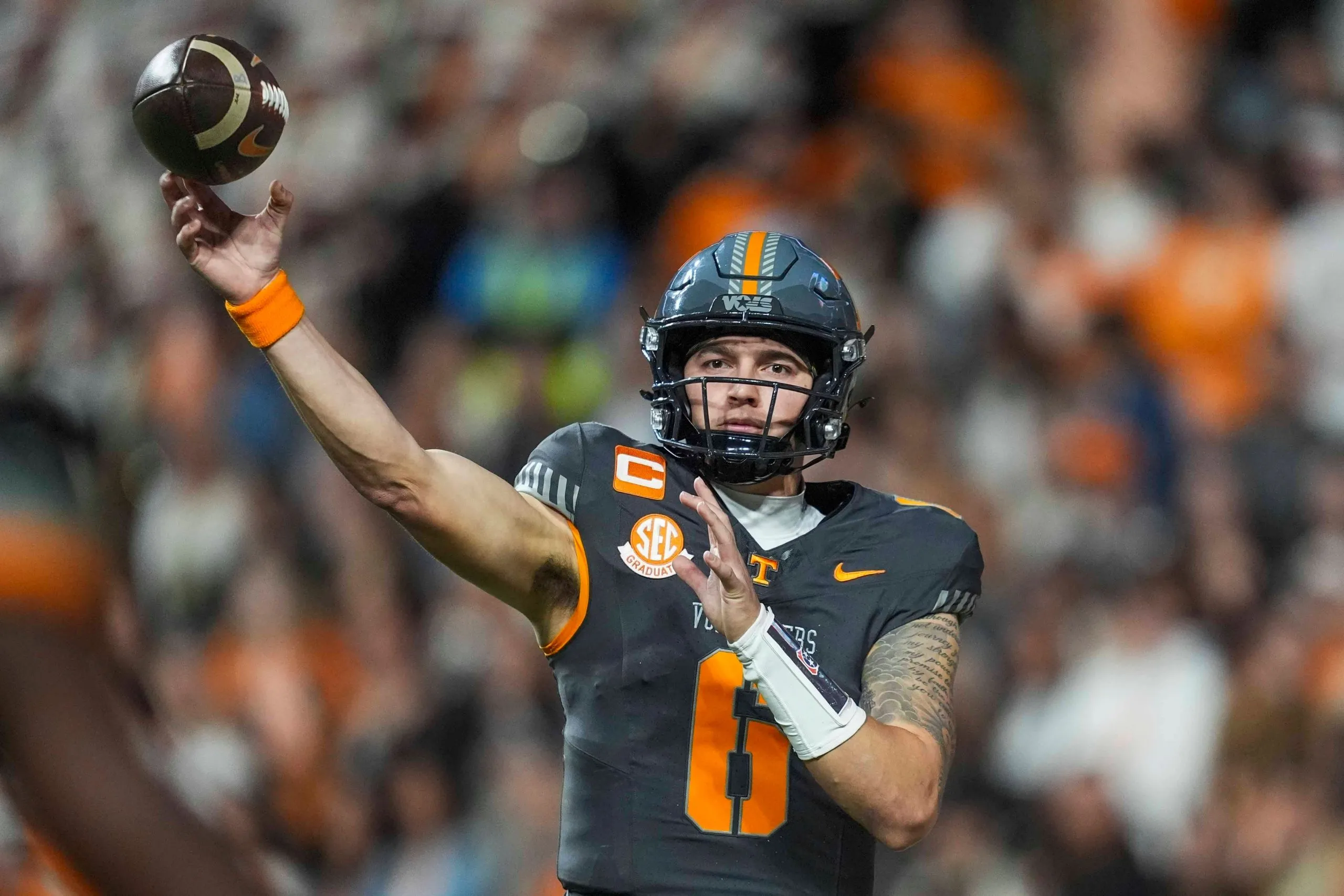
For Joey Aguilar, the Music City Bowl against Illinois carries weight far beyond a typical postseason matchup. What should be a celebration of a productive season has become a moment filled with uncertainty, reflection, and unresolved questions about his future in college football. As Tennessee prepares to take the field in Nashville, Aguilar understands that this game may represent his final appearance in a Volunteers uniform.
That reality became public during Tennessee’s pre-bowl media availability, where Aguilar addressed his situation with striking honesty. Rather than avoiding the topic, the quarterback acknowledged the emotional complexity of playing under a cloud of uncertainty. His words reflected gratitude, composure, and an awareness that circumstances beyond the field now shape his career.
Joey Aguilar’s Emotional Admission Resonates Across College Football
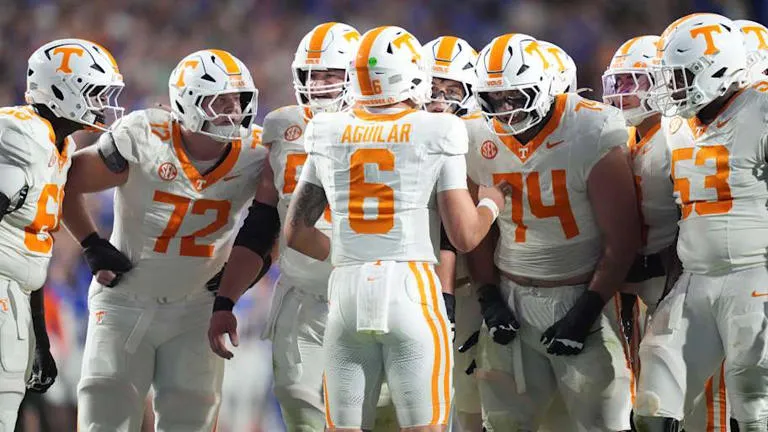
Aguilar’s comments during Tuesday’s media day were simple yet powerful. He spoke about being thankful for the opportunity to play one more game with his teammates, regardless of what the future holds. There was no bitterness in his tone, only appreciation for a season that helped redefine his trajectory.
The quarterback emphasized his connection to the coaching staff, the program, and the Knoxville community. For a player who arrived in Tennessee with expectations but no guarantees, that sense of belonging clearly matters. His admission resonated not just with Volunteers fans, but with a broader college football audience increasingly aware of how fragile eligibility and opportunity can be.
A Transfer That Changed Tennessee’s Season
When Joey Aguilar transferred to Tennessee after two seasons at Appalachian State, he arrived as more than a stopgap option. Head coach Josh Heupel saw him as a capable leader who could operate the offense efficiently while elevating those around him. Aguilar quickly justified that belief.
Over the course of the season, Aguilar completed 66.8 percent of his passes for 3,444 yards and 24 touchdowns. He commanded the offense with confidence, displayed poise in high-pressure moments, and emerged as one of the team’s vocal leaders. Tennessee’s offensive stability owed much to his consistency, particularly in games where execution mattered more than explosiveness.
Leadership Beyond the Stat Sheet
While Aguilar’s numbers were impressive, his influence extended well beyond production. Teammates repeatedly pointed to his calm demeanor and preparation habits as stabilizing forces within the locker room. For a program navigating the constant churn of transfers and roster turnover, that leadership proved invaluable.
Aguilar’s ability to bridge experience from App State with the demands of SEC football allowed him to adapt quickly. Heupel’s system demands decisiveness, and Aguilar delivered, often making the right reads rather than forcing plays. That reliability made Tennessee competitive week after week.
The Eligibility Question That Changed Everything
Despite only playing three seasons of FBS football, Aguilar’s eligibility suddenly became a central issue. The root of the problem lies in his two seasons at Diablo Valley College in 2021 and 2022. Under current NCAA rules, time spent at junior colleges counts toward the five-year eligibility clock.
The NCAA allows athletes four seasons of competition within five years, regardless of whether those seasons are spent at a junior college or an FBS program. That framework means Aguilar’s junior college years cannot be disregarded, even though they occurred before his rise as a Division I quarterback.
Why the JUCO Rule Is Under Fire
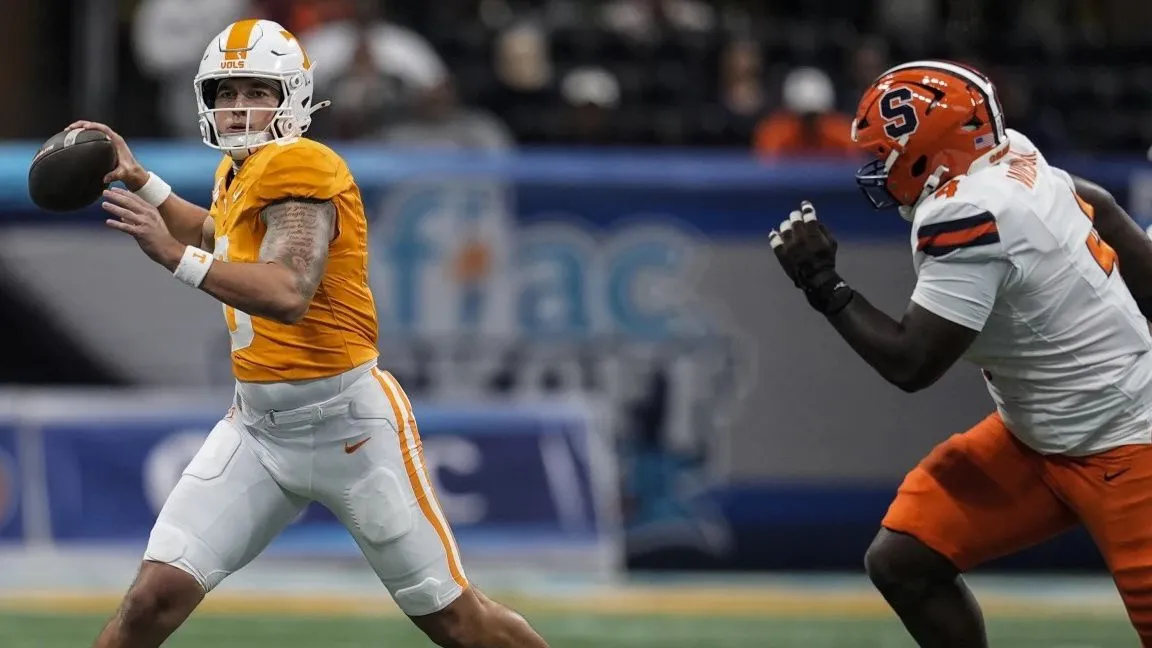
The controversy surrounding JUCO eligibility has gained momentum as more athletes argue that the rule unfairly limits career opportunities. For players like Aguilar, junior college was not a shortcut, but a stepping stone toward development and exposure.
Critics of the rule argue that counting JUCO seasons toward Division I eligibility restricts athletes who take nontraditional paths. Many JUCO players come from under-recruited backgrounds and rely on those programs to earn scholarships. Penalizing them later, opponents argue, undermines the principle of opportunity the NCAA claims to uphold.
Diego Pavia’s Lawsuit Changes the Landscape
The turning point in Aguilar’s situation came with Diego Pavia’s legal challenge against the NCAA. Pavia argued that counting his junior college seasons toward Division I eligibility violated antitrust law by limiting his ability to benefit from NIL opportunities.
A federal judge granted Pavia an injunction, allowing him an additional year of eligibility while preventing the NCAA from punishing him or any program he represents. That ruling sent shockwaves through college football, signaling that long-standing eligibility rules may not be as secure as once believed.
Joey Aguilar Follows a Similar Legal Path
Facing an almost identical eligibility scenario, Aguilar chose to file his own lawsuit against the NCAA. The decision was not taken lightly. Legal action places a spotlight on a player and introduces uncertainty for both athlete and program.
For Aguilar, the lawsuit represents a fight for fairness rather than confrontation. By challenging the rule, he seeks clarity and the opportunity to continue competing at the highest level. His case underscores how legal battles increasingly intersect with on-field outcomes in modern college football.
Tennessee Waits as the Clock Ticks
Aguilar is expected to receive a ruling on his lawsuit after the Music City Bowl on December 30. Until then, Tennessee exists in a holding pattern. Coaches must prepare for multiple scenarios, including the possibility of Aguilar returning or the need to transition to a new starter.
Josh Heupel has rarely benefited from quarterback continuity. If Aguilar were granted another year, he would become only the second starting quarterback to return for a second season under Heupel, following Hendon Hooker’s run in 2021 and 2022. That stability could be invaluable for the Volunteers.
Focus Remains on the Bowl Game
Despite the legal uncertainty, Aguilar has maintained a narrow focus. His comments made it clear that preparation for Illinois remains his top priority. He understands that the bowl game is not just a showcase, but a responsibility to his teammates and the program.
That mindset reflects maturity. Rather than allowing off-field matters to overshadow preparation, Aguilar has compartmentalized the situation. For Tennessee, that approach provides reassurance that their quarterback remains fully engaged.
What a Favorable Ruling Would Mean for Tennessee

If the court rules in Aguilar’s favor, Tennessee would gain a proven leader for another season. In an era defined by transfer portal volatility, retaining a starting quarterback with system familiarity is a luxury.
Aguilar’s return would also allow younger quarterbacks to develop without immediate pressure. Heupel’s offense thrives on rhythm and trust, and continuity at the quarterback position could elevate the Volunteers’ ceiling in a competitive SEC landscape.
The Risk of an Uncertain Outcome
Of course, there is no guarantee the ruling will favor Aguilar. If the NCAA prevails, Tennessee may lose a quarterback who anchored its offense and locker room. That possibility adds urgency to the bowl game, which may serve as both a finale and a statement.
For Aguilar, the stakes are deeply personal. His performance against Illinois could shape perceptions regardless of the legal outcome. A strong showing would reinforce his value, whether at Tennessee or elsewhere.
A Symbol of a Changing NCAA Era
Aguilar’s case highlights the broader transformation underway in college athletics. As NIL, transfers, and legal challenges reshape the landscape, eligibility rules once considered untouchable are now being scrutinized.
Players are increasingly willing to challenge systems they view as restrictive. Aguilar’s willingness to speak openly about his uncertainty reflects a new generation of athletes navigating a complex, evolving environment.
The Music City Bowl as a Defining Moment
When Tennessee takes the field in Nashville, the spotlight will shine brighter on Joey Aguilar than ever before. Whether this game marks the end of his Volunteers chapter or merely a pause before another season remains unknown.
What is clear is that Aguilar has already left a lasting impression. His leadership, production, and composure under pressure have earned respect across college football. The outcome of his lawsuit will determine his next step, but his impact on Tennessee’s season is already secure.

Joey Aguilar’s situation captures the intersection of performance, policy, and personal resolve. As he prepares for the Music City Bowl, he does so knowing that the game represents both an opportunity and a potential goodbye.
Regardless of the ruling, Aguilar’s approach has been defined by gratitude and focus. In a sport increasingly shaped by uncertainty, that steadiness may be his most valuable trait. For Tennessee, for Aguilar, and for college football as a whole, the outcome of this case could resonate far beyond one bowl game.







