

 Vietnamese
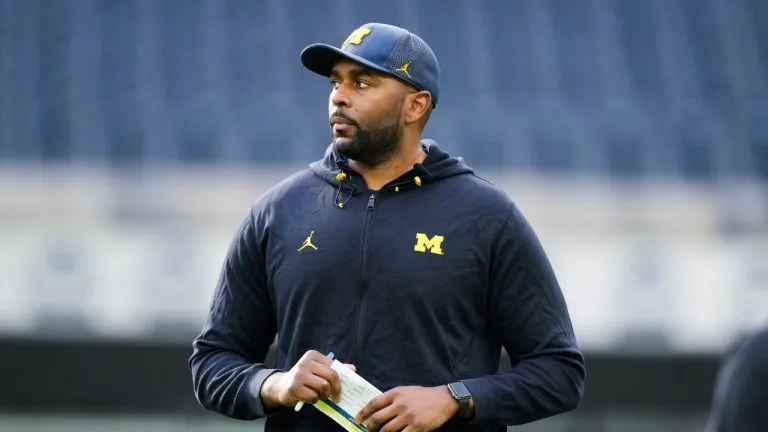
Jim Harbaugh’s complicated loyalty to Michigan resurfaces in a moment of crisis
Jim Harbaugh has never really left Michigan. Even after bolting for the NFL, even after hoisting a Lombardi Trophy-shaped dream with the Los Angeles Chargers, Ann Arbor has remained tethered to him in ways no formal title can sever. And moments like this, messy, uncomfortable, and deeply human, are exactly when that bond resurfaces most visibly.
Harbaugh’s public comments about Sherrone Moore were not calculated soundbites. They carried the weight of a man who understands how fast reputations can crumble, how quickly a program’s internal structure can collapse when scandal overtakes football. He has lived through NCAA scrutiny, media speculation, and institutional pressure. That perspective is why his message to Moore was not about football, resumes, or redemption timelines. It was about survival.
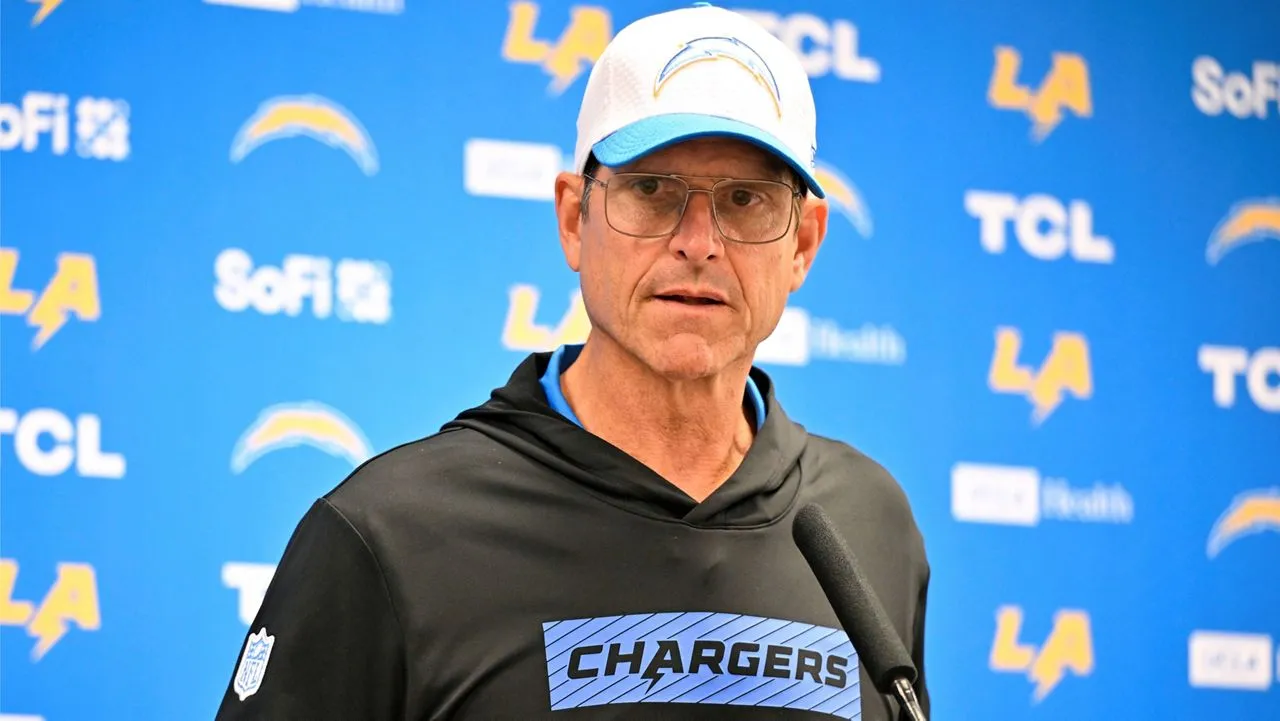
What makes Harbaugh’s stance notable is not that he defended Moore outright, but that he chose empathy over distance. In an era when most coaches cut ties the moment controversy threatens brand value, Harbaugh leaned into the uncomfortable reality that Moore was once family inside Michigan’s football ecosystem. For six seasons, Moore was not just an assistant. He was a pillar of the offensive line rebuild, a recruiter, and eventually a leader groomed for succession.
That history complicates Michigan’s present. Because no matter how aggressively the administration tries to turn the page, the fingerprints of Harbaugh’s tenure are everywhere, including in the crisis now engulfing the program.
Why Michigan’s head coaching job suddenly feels less stable than it looks
On paper, Michigan remains one of the most attractive jobs in college football. Elite facilities, national brand recognition, Big Ten prestige, and a playoff-ready roster foundation should make it irresistible. But stability is currency in coaching searches, and right now, Michigan’s is devalued.
The firing of Sherrone Moore “for cause” did more than remove a head coach. It fractured trust. Players watched a leader vanish abruptly. Recruits saw uncertainty. Assistants were forced into silence. And donors, while energized financially, are not immune to reputational concerns when national headlines shift from wins to criminal proceedings.
This matters because elite coaches are selective not just about resources, but about institutional alignment. They want clarity on governance, expectations, and internal safeguards. Michigan’s current moment raises questions: How much autonomy does the head coach truly have? How quickly can administrative support turn into scrutiny? And how protected is the next hire if unforeseen issues arise?
That’s why the search has been slower, quieter, and more guarded than many expected.
Why Jim Harbaugh is staying out of the formal search process
Despite fan speculation and emotional appeals, Jim Harbaugh is not acting as a behind-the-scenes kingmaker. His comments have made that clear. The Chargers’ season, the demands of an NFL locker room, and the professional distance he must maintain all limit his involvement.
But there is a deeper reason too. Harbaugh understands that Michigan cannot appear dependent on him anymore. His era is over, and the program must establish credibility independent of his shadow. Any visible influence could undermine the authority of the next hire before they even step into Schembechler Hall.
That said, Harbaugh’s influence doesn’t require direct involvement. Coaches talk. Networks exist. Reputations are shaped quietly. Even without formal input, his perspective inevitably seeps into conversations, especially when candidates ask trusted intermediaries about Michigan’s internal dynamics.
In that sense, Harbaugh’s role is passive but powerful.
The Kalen DeBoer question and why Michigan can’t wait on Alabama
Kalen DeBoer’s name continues to hover over the search like a mirage. On one hand, he represents tactical brilliance, modern offensive structure, and playoff pedigree. On the other, his public commitment to Alabama complicates everything.
Michigan cannot afford to be perceived as waiting on DeBoer. Doing so risks stalling recruiting momentum and prolonging uncertainty inside the building. Even if Alabama’s postseason outcome shifts internal pressure, Michigan must operate as if DeBoer is unavailable.
There is also the cultural question. DeBoer’s system thrives on rhythm and trust, but Michigan’s current environment is turbulent. Transitioning into that atmosphere requires not just schematic confidence but emotional authority. Whether DeBoer wants that challenge is far from guaranteed.
Kenny Dillingham’s appeal and the generational contrast
Kenny Dillingham represents the opposite profile. Young, energetic, deeply tied to his alma mater, and openly passionate about culture-building, he aligns with what Michigan might need long-term. His ability to connect with players and recruits could help stabilize a shaken locker room.
However, passion alone does not win Big Ten titles. Dillingham’s relative inexperience at a national power level raises questions about whether Michigan’s expectations align with his developmental timeline. Ann Arbor is not a rebuild project. It is a pressure cooker that demands immediate contention.
That tension makes Dillingham both intriguing and risky.
Jedd Fisch and the appeal of quiet competence
Jedd Fisch’s candidacy resonates precisely because it lacks drama. He has rebuilt programs before, understands roster construction, and commands respect without spectacle. For an administration eager to lower the temperature, Fisch offers predictability.
Yet predictability can feel underwhelming to a fan base accustomed to swagger, edge, and national attention. Michigan must decide whether it wants calm competence or a bold statement hire. Fisch represents the former, and in this moment, that may be exactly what leadership values most.
The locker room factor Michigan cannot ignore
Perhaps the most overlooked variable in this search is the emotional state of the roster. Poggi’s comments were not exaggerations. Betrayal is a dangerous emotion inside a team environment. Players question leadership, motives, and their own futures.
Any new head coach must first be a healer before being a tactician. That means transparency, accountability, and a willingness to listen before asserting authority. Michigan cannot afford a hire who treats this like a normal offseason transition.
This is where experience matters more than résumé lines.
NIL momentum masks deeper uncertainty
The reported uptick in NIL contributions paints a misleadingly optimistic picture. Financial support is essential, but it does not automatically translate into cultural stability. Donor enthusiasm often spikes during moments of upheaval, but sustaining that engagement requires wins, trust, and clarity.
Michigan’s challenge is converting short-term NIL momentum into long-term program health. That depends on the next head coach’s ability to articulate a vision that extends beyond damage control.
What Jim Harbaugh’s words really reveal
When Harbaugh calls Moore’s situation a “tragedy,” he is not commenting on guilt or innocence. He is acknowledging the human cost of institutional collapse. Careers derail. Families suffer. Legacies fracture.
Those words also reflect Harbaugh’s own scars from Michigan’s recent past. He knows how quickly narratives shift, how loyalty can become liability, and how little room there is for nuance once public opinion hardens.
In supporting Moore emotionally while distancing himself structurally, Harbaugh is modeling the balance Michigan itself must strike going forward.
Michigan’s next hire will define more than wins
This search is not just about replacing Sherrone Moore. It is about redefining Michigan’s identity post-Harbaugh. The next head coach must restore trust, stabilize recruiting, manage NIL dynamics, and compete at the highest level, all while navigating a media environment primed for skepticism.
That is a tall order. And it explains why the process feels slower, heavier, and more deliberate than fans would prefer.
Michigan does not need a savior. It needs a steward.
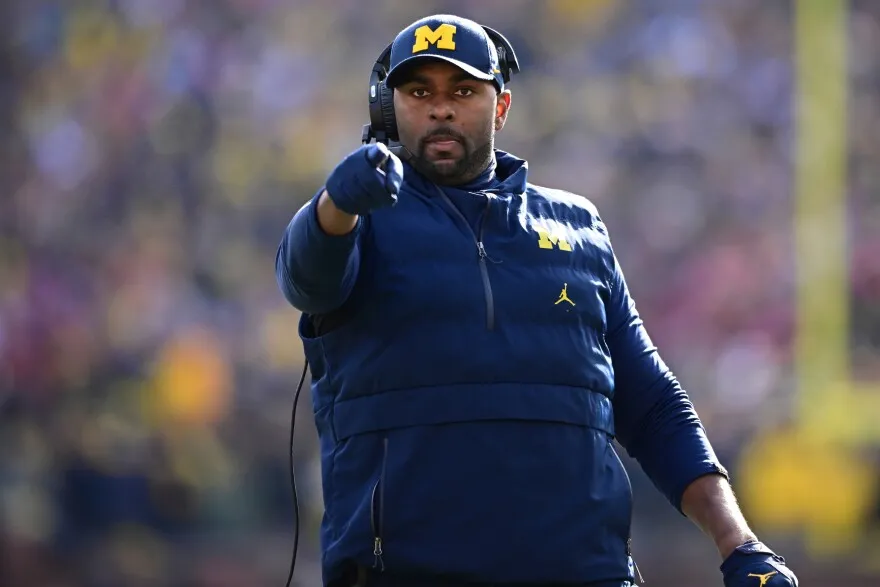
Deja vu is uncomfortable because it reminds us of unresolved lessons. Michigan has been here before, caught between legacy and reinvention, loyalty and accountability. Jim Harbaugh’s voice, steady but distant, underscores that reality.
He will not save Michigan this time. He cannot. The responsibility lies with AD Warde Manuel, the administration, and the next head coach brave enough to inherit a proud but wounded program.
How they navigate this moment will determine whether Michigan’s next chapter is one of renewal or prolonged instability.







