

 Vietnamese
Article
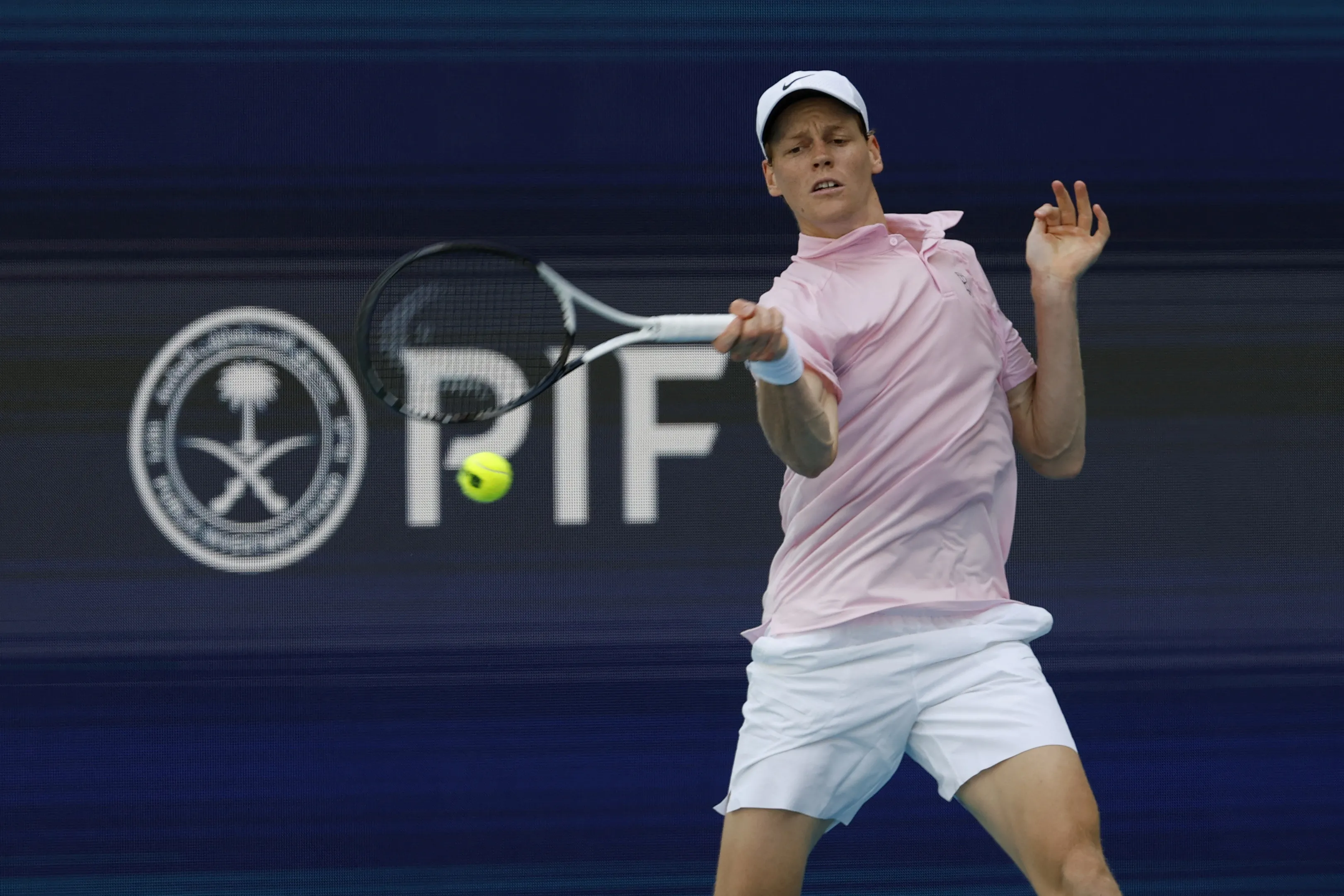
When Jannik Sinner stepped onto the courts at the 2026 Miami Open, fans expected brilliance. What they got instead was something far more overwhelming—a serving masterclass that redefined his game and left opponents scrambling for answers.
The Italian superstar didn’t just win matches—he dominated them with a relentless barrage of aces, pinpoint precision, and an upgraded service strategy that turned his serve into one of the most lethal weapons on the ATP Tour. His performance wasn’t just about lifting another trophy—it was about evolution, control, and rewriting expectations.
This is the story behind Sinner’s “ace storm” in Miami—and how his serve became the engine of his historic run.
A Tournament Defined by Dominance
The 2026 Miami Open will go down as one of the most commanding performances in recent tennis history. Sinner swept through the draw without dropping a single set, ultimately defeating Jiří Lehečka in the final to claim the title.
But this wasn’t just another tournament win. It completed the prestigious “Sunshine Double”—winning both Indian Wells and Miami in the same season—a feat only a handful of players have ever achieved.
Even more impressive? Sinner became the first player in history to achieve this double without losing a set.
While his baseline game remained as sharp as ever, the real difference-maker was his serve.
The Rise of the “Ace Storm”
Throughout the Miami Open, Sinner unleashed what analysts and fans alike began calling an “ace storm.” Match after match, he racked up double-digit aces, often breaking opponents’ rhythm before rallies could even begin.
Against top players like Alexander Zverev, Sinner fired 15 aces in a single match, combining power with precision.
This wasn’t random—it was the result of a clear tactical shift. Instead of relying primarily on baseline rallies, Sinner began using his serve as the first strike in every point. The goal was simple: shorten rallies, control tempo, and apply pressure instantly.
And it worked.
The Numbers Behind the Surge
The stats from Sinner’s 2026 season reveal just how dramatic this transformation has been:
- First-serve percentage jumped to 67.5%, a career high
- First-serve points won climbed to 81%
- Service games won increased to 94%
- Aces per match nearly doubled to 11.1
These numbers are not just impressive—they’re elite. They place Sinner among the best servers on tour, a category he wasn’t traditionally associated with earlier in his career.
The most striking improvement is his consistency. By landing more first serves while maintaining effectiveness, Sinner has removed one of the few vulnerabilities in his game.
Precision Over Power
Unlike traditional big servers who rely purely on speed, Sinner’s serve is about placement and intelligence.
He mixes wide serves, body shots, and down-the-T deliveries with surgical accuracy. Opponents can’t predict where the ball will go, and even when they do, the execution is so clean that returning it becomes a challenge.
This approach reflects a broader trend in modern tennis—where precision often outweighs brute force. Sinner isn’t just hitting harder; he’s serving smarter.
Mental Control and Match Flow
Another key aspect of Sinner’s serving surge is mental composure. His ability to hold serve consistently allows him to dictate the flow of matches.
During his Miami run, he frequently breezed through service games, conserving energy while forcing opponents to fight for every point on their own serve. This psychological pressure builds over time, often leading to errors or rushed decisions.
As noted during his semifinal run, Sinner lost very few points on serve, showcasing not just technical excellence but also mental clarity under pressure.
In many ways, his serve became a safety net—ensuring stability even in tight moments.
From Baseline Star to Complete Player
Early in his career, Sinner was known primarily for his explosive groundstrokes and aggressive baseline play. While those strengths remain, his improved serve has transformed him into a more complete player.
Now, he can:
- Win quick points with aces
- Set up easy winners with strong first serves
- Control rallies from the very first shot
- Maintain dominance even against elite returners
This evolution is what separates good players from great ones. And in Miami, Sinner looked every bit like a generational talent reaching his peak.

Breaking Records Along the Way
Sinner’s serve wasn’t just effective—it helped him rewrite the record books.
He extended his streak to 34 consecutive sets won in Masters 1000 events, surpassing previous records and showcasing unmatched consistency.
He also became the first player ever to win three consecutive Masters 1000 titles without dropping a set, further cementing his dominance.
These achievements highlight just how complete his game has become—and how central his serve is to that success.

The Tactical Shift: Why It Matters
Sinner’s serving surge isn’t just a personal milestone—it’s a tactical blueprint for modern tennis.
By improving his first-serve percentage and maintaining high effectiveness, he has:
- Reduced reliance on long rallies
- Increased efficiency in matches
- Minimized physical wear over tournaments
- Gained a consistent edge against top opponents
In a sport where margins are razor-thin, these advantages can be the difference between winning and losing at the highest level.
What Opponents Are Saying
While official quotes vary, the sentiment across the tour is clear: Sinner’s serve has become a problem.
Players who once felt comfortable engaging him in rallies are now under immediate pressure. Return games have become battles for survival rather than opportunities.
This shift changes match dynamics entirely—and forces opponents to adapt quickly or fall behind.
The Bigger Picture: A New Era of Dominance
Sinner’s Miami performance signals more than just a hot streak—it suggests the beginning of a new era.
With his serve now matching his already elite baseline game, he has fewer weaknesses than ever before. Combined with his mental toughness and physical conditioning, this makes him one of the most complete players on the ATP Tour.
At just 24 years old, his ceiling remains incredibly high.
What Comes Next?
Following his Miami triumph, Sinner will transition to the clay-court season, where serving plays a slightly different role. However, the confidence and rhythm he has built on hard courts could carry over.
If his serve continues to perform at this level, there’s little doubt he’ll remain a dominant force across all surfaces.
And if Miami was any indication, the rest of the tour has been put on notice.
Conclusion
Jannik Sinner’s “ace storm” in Miami wasn’t just about numbers—it was about transformation.
By elevating his serve to elite levels, he has added a new dimension to his game—one that complements his already formidable baseline skills and mental resilience.
The result? A historic Sunshine Double, record-breaking performances, and a clear message to the tennis world: Sinner isn’t just winning—he’s evolving.
And if this serve surge continues, we may be witnessing the rise of one of the most dominant players of his generation.







