Vietnamese
The Chili Bowl Nationals, one of the most prestigious and celebrated events in dirt track racing, are known for high-speed thrills, close-quarter competition, and raw emotion. But this year’s event took a disturbing turn when an illegal fight broke out, plunging the venue into chaos and leaving at least one driver struggling to breathe.
What should have been a showcase of racing talent instead became a flashpoint for debate about driver conduct, event security, and safety protocols—not just in grassroots dirt racing, but across the wider motorsports world, including NASCAR.
Image: Packed indoor dirt track at the Chili Bowl Nationals under bright arena lights
What Happened at the Chili Bowl Nationals?
According to reports from inside the venue, tensions that had been simmering throughout the event boiled over following an on-track incident. Words were exchanged, tempers flared, and the situation escalated rapidly into a physical altercation that officials later described as illegal and unacceptable.
Key details from the incident:
-
The fight occurred in a restricted area
-
Multiple individuals became involved
-
One driver was left visibly distressed and struggling to breathe
-
Event officials intervened to restore order
The altercation shocked fans in attendance and those watching clips circulate online, as the Chili Bowl has long been regarded as a crown jewel of dirt racing—not a place for uncontrolled violence.
A Driver in Distress: The Most Alarming Moment
The most troubling aspect of the incident was not the scuffle itself, but its physical impact on one of the drivers involved. Witnesses reported that the driver appeared to be gasping for air, prompting immediate concern from crew members and officials.
Why this raised alarms:
-
Motorsports environments already strain the body
-
Drivers wear restrictive safety gear
-
Any breathing issue can become a medical emergency
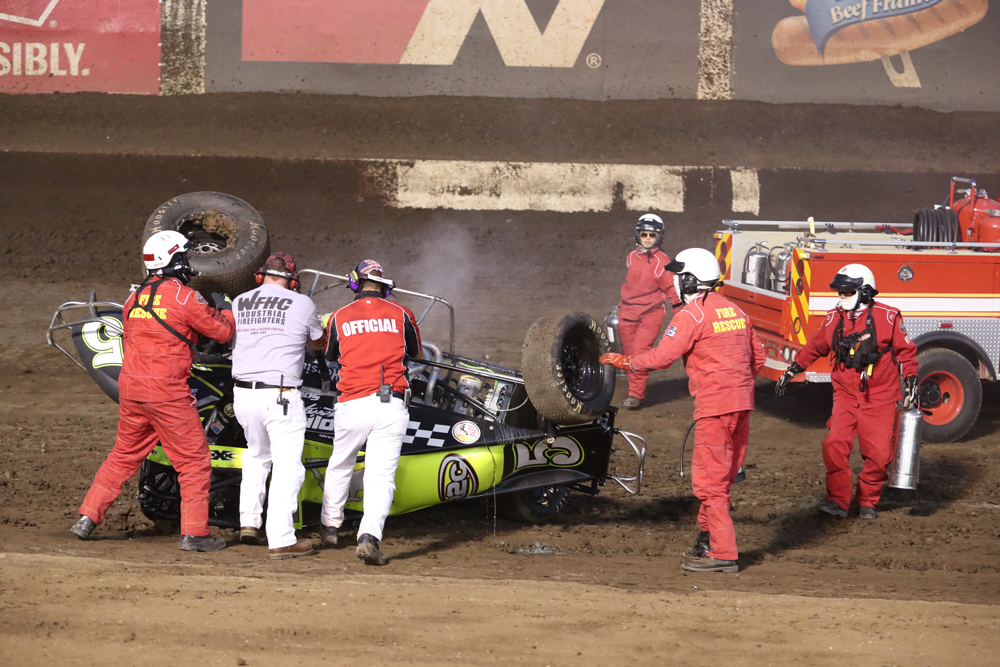
Medical staff were quickly alerted, and the driver was attended to as the situation de-escalated. While no life-threatening injuries were ultimately reported, the incident underscored how quickly emotions can turn dangerous in high-pressure racing environments.
Image: Track safety crew rushing toward a stopped driver
Why Was the Fight Considered Illegal?
Physical confrontations are not uncommon in sports fueled by adrenaline, but motorsports organizations draw a firm line when it comes to violence in restricted or unsafe areas.
The fight was deemed illegal because:
-
It violated event conduct policies
-
It occurred in a controlled competition zone
-
It endangered not just participants, but bystanders
Unlike post-game scuffles in traditional sports, racing altercations happen around heavy machinery, fuel, and confined spaces, dramatically increasing the risk of serious injury.
The Role of Emotions in High-Stakes Racing
Dirt racing, especially at a marquee event like the Chili Bowl Nationals, is emotionally charged by design. Drivers are competing not just for trophies, but for:
-
National recognition
-
Career advancement
-
Future NASCAR or professional racing opportunities
When races are tight and stakes are high, frustration can spill over. But experts argue that emotional control is as much a skill as car control.
How NASCAR and Motorsports View Such Incidents
While the Chili Bowl is not a NASCAR-sanctioned event, the incident reverberated across the motorsports community. NASCAR, in particular, has spent years refining its approach to driver conduct and safety enforcement.
NASCAR’s evolving stance includes:
-
Strict penalties for physical altercations
-
Mandatory cooling-off periods
-
Heavy fines and suspensions for repeat offenders
Many insiders believe NASCAR will closely monitor how grassroots events like the Chili Bowl handle incidents, as they often serve as pipelines for future professional drivers.
Fan Reaction: Shock, Anger, and Concern
The reaction from fans was swift and divided. Social media platforms lit up with videos, commentary, and debate.
Common fan responses included:
-
Concern for the driver’s health
-
Frustration over damaged event reputation
-
Calls for harsher penalties
-
Defense of emotional reactions in racing
What united most fans, however, was the belief that no race is worth putting lives at risk.
Image: Fans filming a chaotic scene with smartphones
Event Security and Crowd Control Under Scrutiny
Another major takeaway from the incident was the effectiveness of event security. Large motorsports events often walk a fine line between accessibility and control.
Questions now being asked:
-
Were enough officials present in high-risk areas?
-
Could the fight have been prevented earlier?
-
Are current security measures sufficient for modern racing crowds?
As events grow in popularity, so too must their infrastructure for handling conflict.
A Broader Issue in Dirt Racing Culture?
Some critics argue that the incident reflects a deeper cultural issue within certain segments of dirt racing, where confrontations have historically been more tolerated than in top-tier professional series.
However, others push back, noting:
-
The vast majority of dirt racers are disciplined professionals
-
Incidents like this are exceptions, not norms
-
Increased visibility magnifies isolated events
Still, the debate has reignited conversations about modernizing conduct standards across all levels of racing.
Safety Risks Beyond the Track
Racing safety discussions often focus on crashes, car design, and track conditions. This incident highlighted a different, less-discussed risk: human conflict in dangerous environments.
Potential hazards include:
-
Falls near racing surfaces
-
Accidental contact with equipment
-
Medical emergencies caused by stress or injury
Experts emphasize that safety protocols must extend beyond the race itself.
Image: Close-up of racing helmets and safety gear lined up
Possible Disciplinary Actions Ahead
While official sanctions were still under review at the time of reporting, motorsports insiders expect consequences.
Potential outcomes may include:
-
Event bans
-
Fines
-
Loss of racing privileges
-
Mandatory conduct training
Strong enforcement would send a clear message that violence has no place in racing, regardless of provocation.
Lessons for Young and Aspiring Drivers
The Chili Bowl Nationals attract not only seasoned racers but also young drivers dreaming of professional careers. Incidents like this serve as powerful cautionary tales.
Key lessons include:
-
Reputation matters as much as performance
-
Scouts value composure under pressure
-
One moment can define a career
Many team owners and sponsors prioritize drivers who can handle adversity without losing control.
How Motorsports Can Prevent Future Incidents
Preventing similar situations requires a multi-layered approach.
Potential solutions:
-
Clearer conduct rules communicated to all participants
-
Increased presence of officials in high-tension areas
-
Designated cool-down zones after races
-
Conflict de-escalation training for staff
Proactive measures can reduce the likelihood of emotions boiling over into physical confrontations.
The Chili Bowl’s Legacy at Stake?
The Chili Bowl Nationals have spent decades building a reputation as a proving ground for elite talent. While one incident won’t erase that legacy, repeated issues could tarnish its standing.
Organizers now face the challenge of:
-
Reassuring fans and teams
-
Demonstrating commitment to safety
-
Preserving the event’s prestige
Most observers believe decisive action will help the event move forward stronger.
A Reminder of Racing’s Human Element
At its core, racing is a human endeavor—driven by passion, pride, and pressure. While those elements make the sport thrilling, they also demand responsibility.
The Chili Bowl incident serves as a stark reminder that emotions must be managed, especially when lives are at stake.
Image: Quiet moment in the pits after a chaotic race
What Comes Next?
As investigations conclude and any penalties are announced, the motorsports world will be watching closely. The outcome will likely influence:
-
Future event security planning
-
Conduct policies across racing series
-
How young drivers are mentored
Ultimately, the goal is not punishment for its own sake, but prevention and progress.
Final Thoughts: Racing Must Protect Its Own
The illegal fight at the Chili Bowl Nationals was a moment no one wanted—but perhaps one the sport needed. It exposed vulnerabilities, sparked important conversations, and reinforced a simple truth:
No trophy, no rivalry, and no moment of anger is worth risking a life.
If motorsports can learn from this incident and strengthen its commitment to safety and professionalism, the Chili Bowl—and racing as a whole—can emerge better, safer, and more united than before.