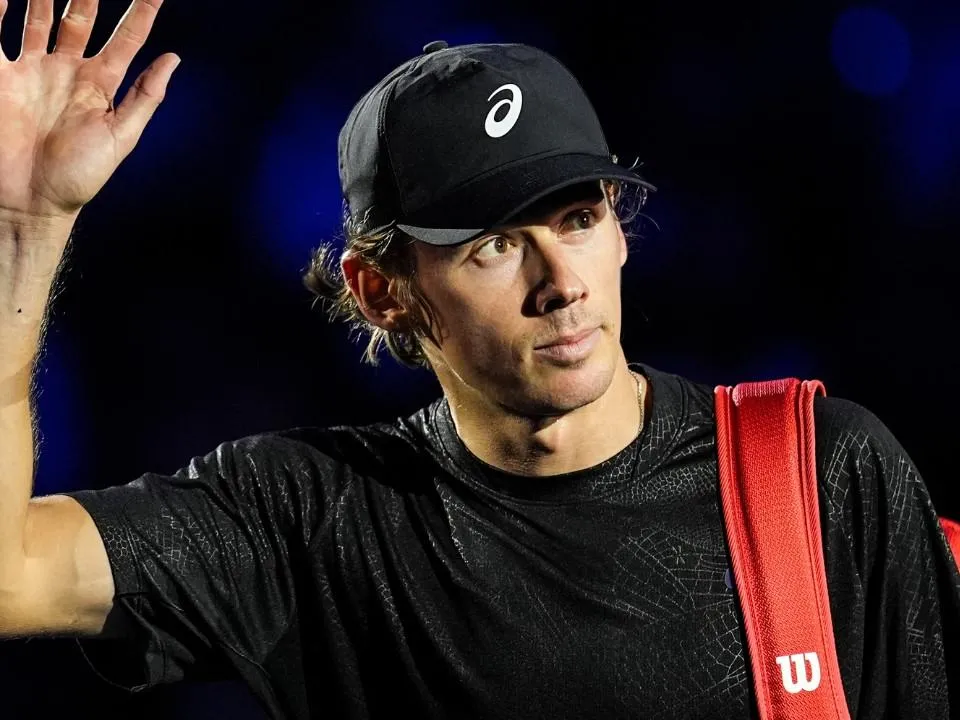
Vietnamese
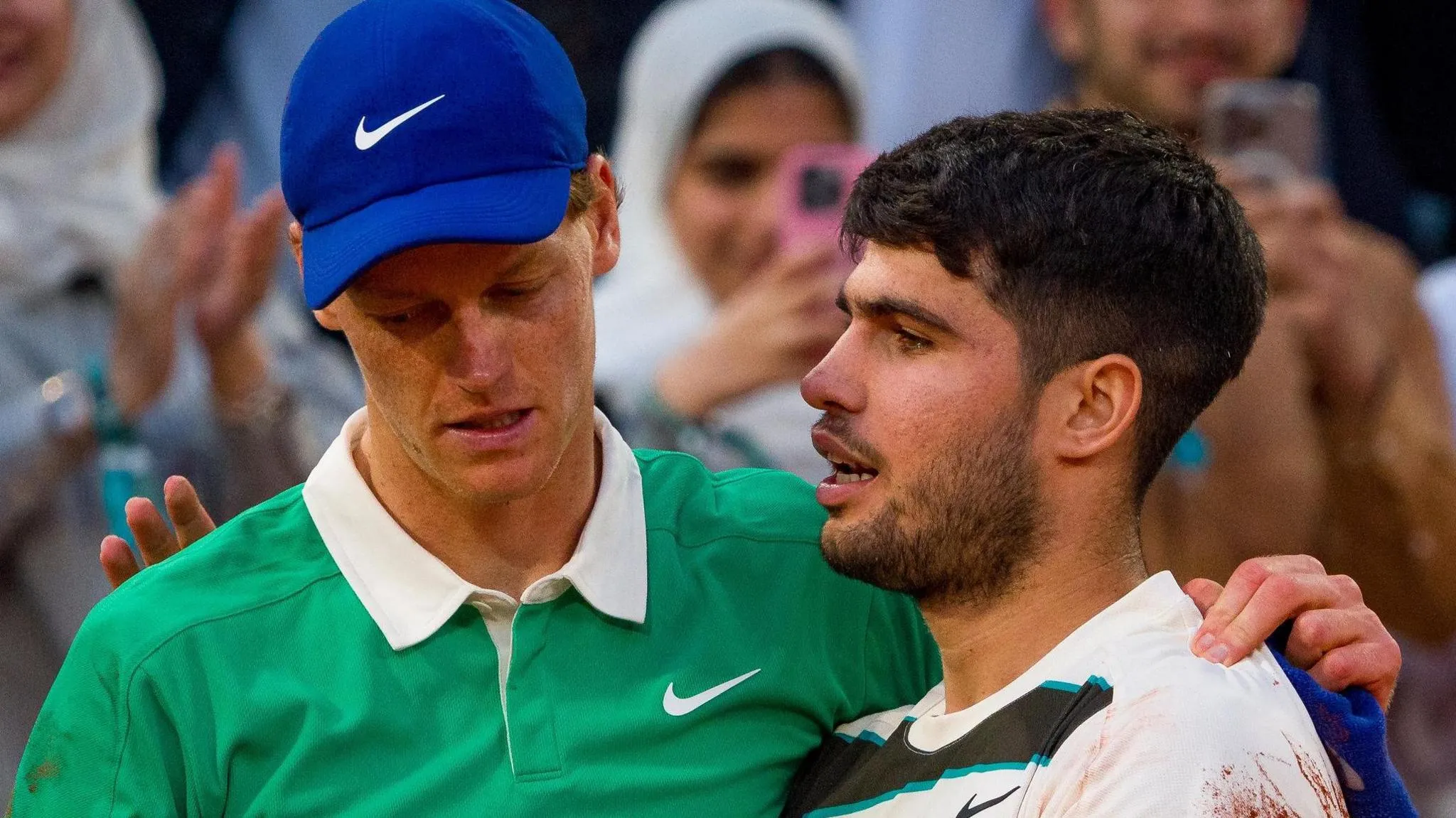
The modern men’s tennis hierarchy has been clearly defined
Over the past two seasons, men’s tennis has settled into what feels like a familiar pattern. No matter the surface, location, or stakes, two names keep rising to the top: Carlos Alcaraz and Jannik Sinner. Their dominance has been so consistent that many fans and analysts have begun framing the ATP Tour around a simple question who, if anyone, can stop them?
Alcaraz’s explosive athleticism, creativity, and fearless shot-making have made him a generational spectacle. Sinner, by contrast, represents ruthless efficiency: clean ball-striking, relentless depth, and a mental composure that rarely wavers. Together, they have set a standard that has pushed the rest of the tour into a prolonged chase mode.
Yet tennis history has shown time and again that dominance is never permanent. And now, Alex de Minaur believes his moment to challenge the established order is approaching faster than many expect.
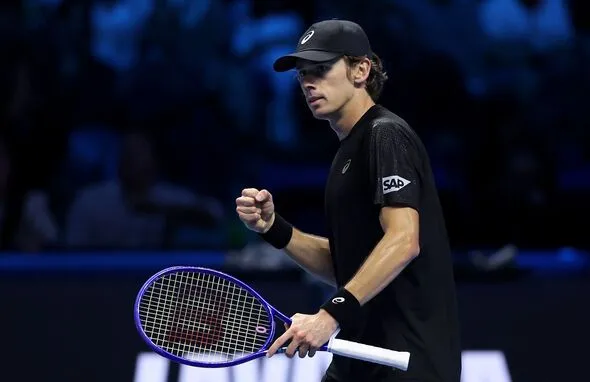
Alex de Minaur’s quiet rise has reached a turning point
Ranked world No. 7 and coming off one of the strongest seasons of his career, Alex de Minaur is no longer content with incremental progress. The Australian has spent years earning a reputation as one of the tour’s most relentless competitors quick, disciplined, and mentally resilient. What he lacked in raw power, he compensated for with speed, court coverage, and tactical intelligence.
In 2025, those qualities finally began translating into deeper runs at the biggest events. Winning the Washington Open and reaching the semifinals of the ATP Finals signaled a player who had moved beyond consistency and into genuine contention. More importantly, his performances against top-tier opponents suggested that the gap separating him from the elite was narrowing.
For de Minaur, this wasn’t just validation it was motivation.
Respect for Alcaraz and Sinner, but no intimidation
In a candid assessment, de Minaur openly acknowledged what makes Jannik Sinner so difficult to beat. He praised the Italian’s ability to maintain an unwavering level from start to finish, highlighting both his technical precision and mental strength. According to de Minaur, Sinner’s resilience through highs and lows particularly after emotionally taxing moments sets him apart.
Yet admiration does not equal submission. For de Minaur, understanding their strengths is the first step toward challenging them. He recognizes that to compete with players like Alcaraz and Sinner, there is no room for mental lapses or slow starts. Every point must be contested with intent, every game approached with clarity.
His message was clear: the goal is not to hope for an off day from the top two, but to force them into uncomfortable territory through sustained pressure.
A competitive mindset fueled by frustration
De Minaur’s statement goes beyond personal ambition. It reflects a broader sentiment shared quietly by many players on tour. Tennis, at its core, thrives on uncertainty. When the same names dominate the sport’s biggest stages, the competitive fire among challengers only intensifies.
As de Minaur put it, competitors do not enjoy watching the same two players win every major. That frustration, rather than discouragement, has become fuel. For him, breaking the Alcaraz-Sinner hold isn’t just about rankings or trophies 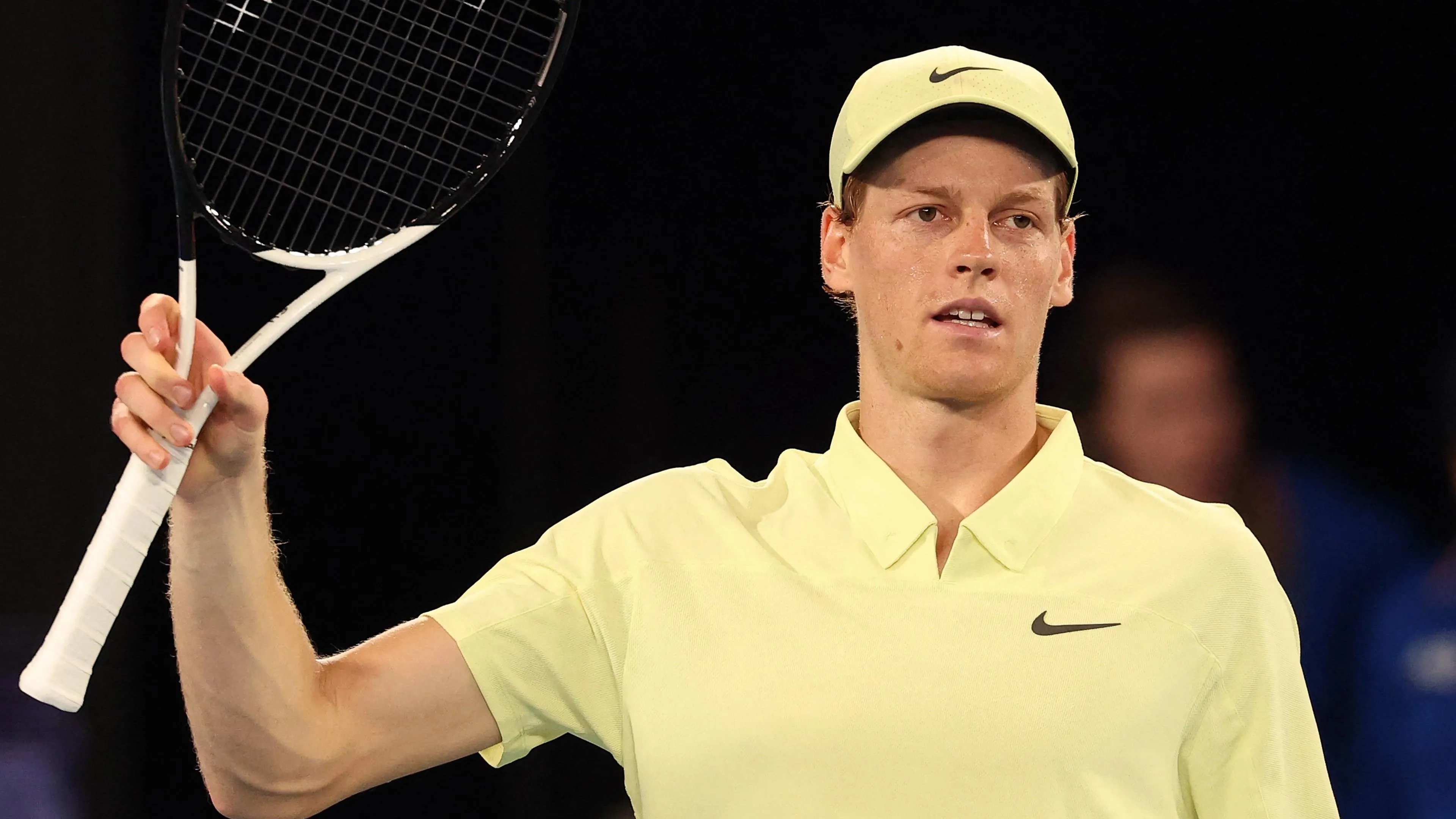 it’s about restoring balance to the competitive landscape.
That mindset marks a significant shift. De Minaur is no longer positioning himself as an underdog hoping for a breakthrough. He is declaring himself a disruptor.
Jannik Sinner acknowledges de Minaur’s growing threat
Interestingly, the respect appears to be mutual. After defeating de Minaur in the semifinals of the ATP Finals, Jannik Sinner offered high praise for the Australian’s development. He pointed out noticeable improvements, particularly on the backhand wing, and emphasized de Minaur’s growing ability to sustain elite-level play over extended stretches.
Sinner’s comments carried weight because they came from a player who has faced de Minaur repeatedly in high-stakes situations. His observation that de Minaur can now “go all out” for entire matches, rather than short bursts, speaks to a transformation in endurance and belief.
Perhaps most telling was Sinner’s suggestion that a top-five ranking is well within de Minaur’s reach—an endorsement that reinforces the Australian’s own confidence heading into 2026.
Physical strength and mentality form the foundation
One of the most overlooked aspects of de Minaur’s evolution has been his physical development. Long known for speed rather than strength, he has quietly built a more robust frame capable of handling the punishing rallies demanded by modern tennis.
That physical growth has complemented his natural defensive instincts, allowing him to turn defense into offense more effectively. Combined with an already elite work ethic, it has helped him withstand the physical and mental grind of deep tournament runs.
Equally important is his mentality. De Minaur has repeatedly shown an ability to bounce back from difficult losses—a trait Sinner himself highlighted. In a sport where confidence can swing dramatically from week to week, that emotional stability could prove decisive.
Humility shaped by Australian tennis history
Despite his rising status, de Minaur remains grounded when discussing his place in Australian tennis history. He has consistently acknowledged that success at the Grand Slam level is the true benchmark for greatness. Without a major title, he believes comparisons to legends of the past are premature.
That humility is rooted in perspective. Australia’s tennis heritage looms large, and the shadow of Lleyton Hewitt—who last lifted a men’s singles major for the country in 2002—still hangs over every Australian hopeful. De Minaur understands that talent alone is not enough to break a two-decade drought.
What separates him now is belief that the gap is no longer insurmountable.
The Grand Slam barrier remains the final test
Statistically, de Minaur has knocked persistently on the door. Six Grand Slam quarterfinal appearances, including two in the most recent season, underline his consistency at the highest level. Yet the elusive breakthrough into a semifinal—or beyond—has remained just out of reach.
Breaking that barrier is not just a technical challenge but a psychological one. The later rounds of majors demand sustained excellence against opponents who rarely give free points. For de Minaur, this is where his improved endurance and sharpened weapons must converge.
The Australian Open, his home Slam, represents both opportunity and pressure. Familiar conditions, crowd support, and emotional investment make it the ideal stage for a defining run in 2026.
Tactical evolution will determine his ceiling
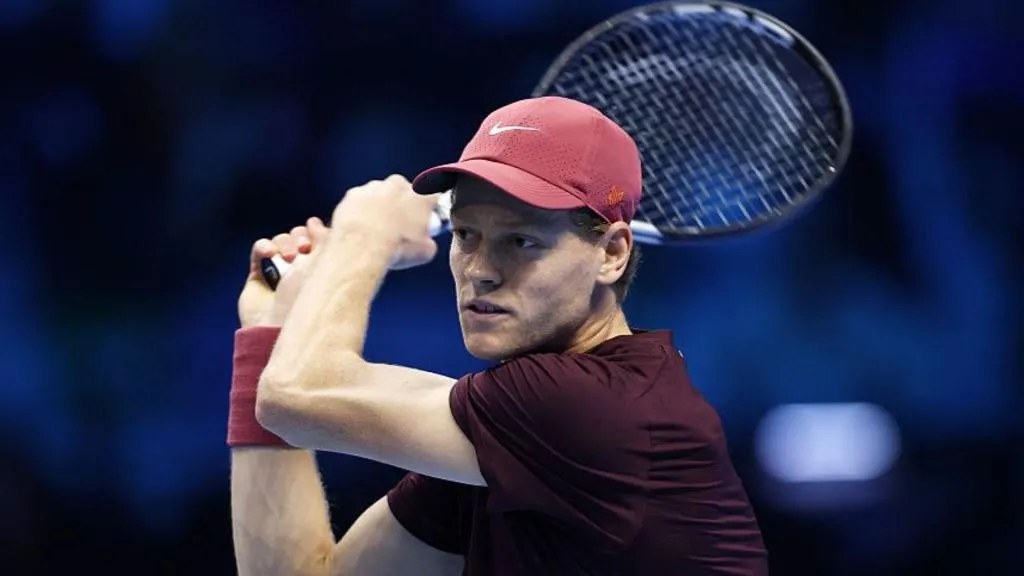
To truly threaten Alcaraz and Sinner, de Minaur knows incremental improvement won’t suffice. Tactical evolution is essential. Against Alcaraz’s explosive variety, de Minaur must neutralize pace while capitalizing on openings. Against Sinner’s baseline dominance, he must disrupt rhythm and shorten points selectively.
These adjustments require confidence in offensive execution—a growing strength but still an area for refinement. If de Minaur can consistently impose his game rather than react, his chances of flipping the script increase dramatically.
His willingness to embrace this challenge suggests a player ready to redefine his identity on tour.
2026 shapes up as a defining season
Everything about de Minaur’s recent comments points toward 2026 as a pivotal year. The foundation has been laid through steady improvement, physical development, and mental growth. What remains is execution on the biggest stages.
The dominance of Alcaraz and Sinner has elevated the tour, forcing everyone else to raise their standards. De Minaur appears eager to meet that demand head-on. His declaration is not reckless bravado, but calculated confidence built on evidence.
If he can translate belief into results, 2026 could mark the beginning of a new chapter in men’s tennis—one where the hierarchy becomes less predictable and more fiercely contested.
For now, Carlos Alcaraz and Jannik Sinner remain the benchmarks. But Alex de Minaur has made one thing clear: he has no intention of staying in their shadow much longer.